In short
Your diary is filling up with meetings won on LinkedIn, and yet almost nothing gets signed. The instinct is to look for more meetings. That is the wrong diagnosis. When most calls lead nowhere, it is neither the call nor the volume that needs fixing: it is what happens just before, at the moment you say yes to the slot.
What a dead-end meeting costs
A pointless call does not cost only thirty minutes. There is the preparation, the write-up, the follow-up you feel obliged to send, and above all the slot that was not given to a prospect with a real project. In an SME where the managing director or the sales manager takes these calls, that time comes straight out of delivery, management or existing clients.
Let's take an example calculation. Four dead-end meetings a month, at an hour and a half each including preparation and follow-up, add up to six hours. That is almost a full working day for a managing director, every month, for nothing.
Why so many meetings are empty
On LinkedIn, accepting a call costs the prospect nothing. Many say yes out of politeness, out of curiosity, or to "see what's out there". Others have a real interest but no power to decide, or no reason to act before next year.
None of these prospects is a bad contact. They are simply not ready for a sales call today. The job is to know that beforehand, not to find out ten minutes in.
The logic comes from consultative selling methods, the best known of which is the Sandler method: a quick, clear "no" is worth more than a "maybe" that drags on for weeks.
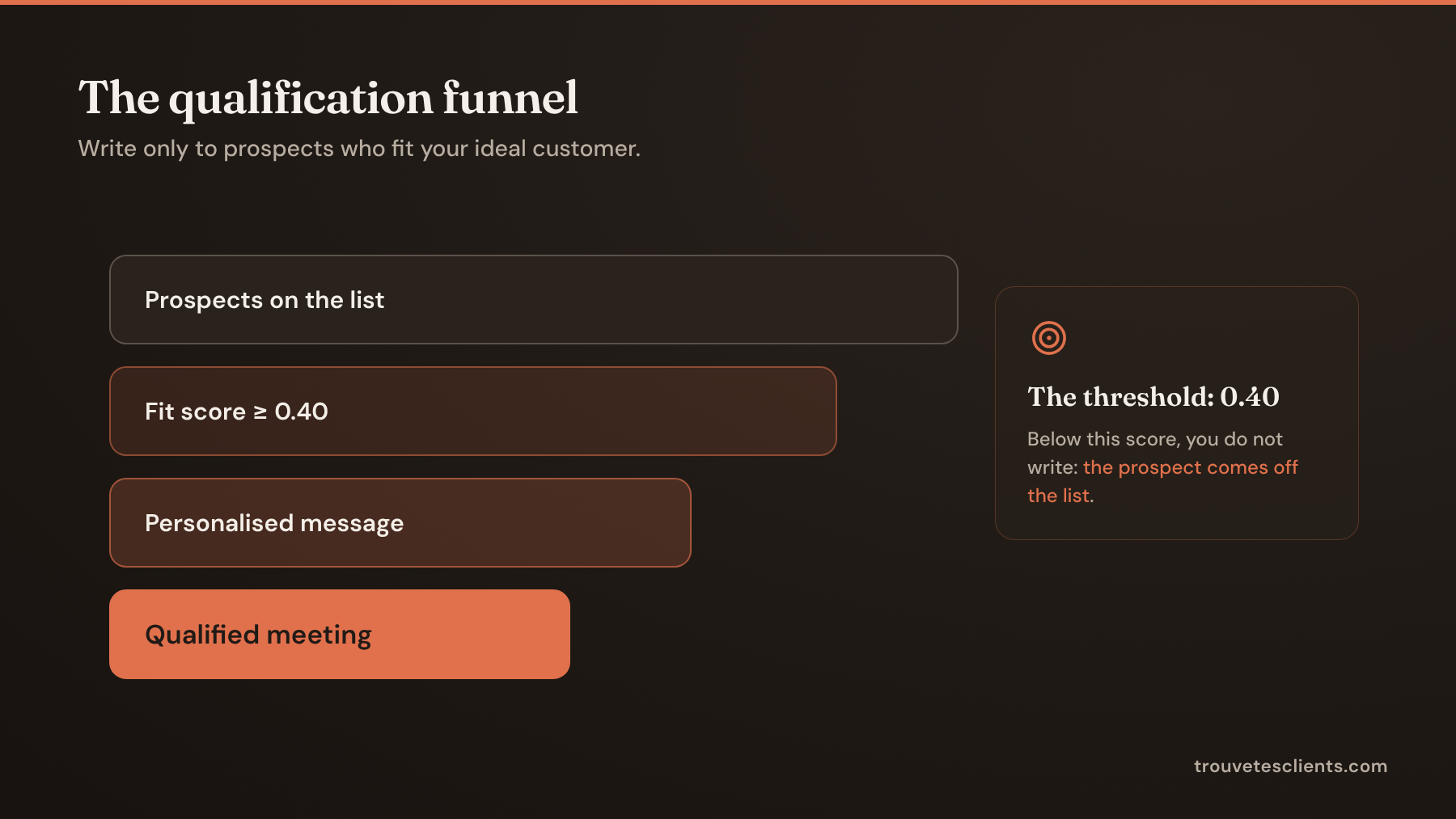
Three questions, asked by message
These questions are asked in the LinkedIn conversation, at the moment the prospect accepts the idea of a call, before you send a slot. One at a time, rephrased in your own words.
1. Why now?
"What makes you look at this at the moment?"
You are looking for a trigger: a new hire, a lost client, a new site, a deadline. Without a trigger there is no urgency, and without urgency the project slips to the next quarter.
2. Who decides?
"Who else would be involved in a decision like this?"
The aim is not to sideline the person you are talking to, but to know who you are dealing with. In an SME, the answer is often "my business partner" or "our finance director". It is then more useful to invite them to the call than to have to go through everything a second time. For a software vendor this question is central, because the user, the payer and the decision-maker are not always the same person: see prospecting SMEs when you sell B2B software.
3. What comes next?
"If the conversation makes sense for you, what would the next step be on your side?"
The answer separates a project from curiosity. "I have to present options to the management committee in November" and "I'm just looking into it" do not call for the same meeting.
What the message looks like
Here is a way of asking the first question without it feeling like an interrogation:
"Happy to have a chat. So that the 30 minutes are useful to you, what makes you look at this at the moment? I'll prepare the call accordingly."
The reason given ("so that it's useful to you") changes everything: the question is no longer a filter, it is proof that you take it seriously. The other two questions follow naturally in the next reply.
Reading the answers
| Answer | What it shows | What to do | |---|---|---| | Precise trigger, decision-maker identified, deadline | Real project | Book the meeting, invite the decision-makers | | Real interest, no deadline | Future project | Offer to get back in touch on a specific date | | "I'm just looking into it", no trigger | Curiosity | Send a useful resource, no call | | No answer to the questions | Low interest | Do not chase for a meeting |
Decline politely, without closing the door
Saying no to a call feels risky, because it seems like losing a prospect. In reality, you are only losing a meeting that would have come to nothing. One possible wording:
"Thank you for your reply. If I understand correctly, this isn't a priority before next year. Rather than taking up your time now, I suggest I get back to you in January. In the meantime, here's a resource that may be useful."
Note the follow-up date in your pipeline. That is what makes the difference between a refusal and a lost contact.
Measure what matters
Once a month, go back over the month's meetings: how many had a trigger, a decision-maker present and a clear next step? That ratio says more about your prospecting than the number of calls. For calculating the upstream indicators, see measuring your LinkedIn reply rate.
A diary that is less full but has the right people in it is worth more than a packed one. Once you have the right meetings, the next step is not to waste them: structuring a 30-minute first meeting.